
Features
Six things stores usually come to us for, plus everything else that makes handling returns something you can actually keep up with, day after day.
The RMA system: returns and warranty claims
Two processes that are easy to mix up, each governed by its own deadlines. Start with the one that applies to you.
-
Returns management system
What a returns management system is, why a store needs a dedicated tool, and what such a tool does day to day. Explained through RetJet.
-
Warranty claims management system
What a warranty claims management system is, how a warranty claim differs from a return, and which deadlines you need to track. Explained through RetJet.
Six features most stores start with
-
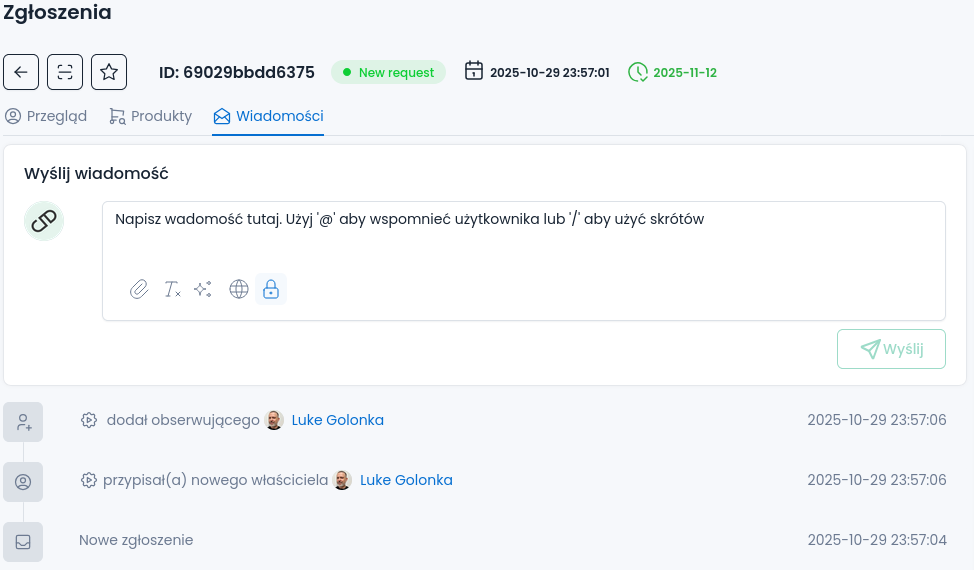
One shared place for returns and shipments, whatever the source. Allegro, your own store, or maybe InPost Szybkie Zwroty? All of it, in one place.
- Requests from your store, marketplaces and carrier services in one view
- The same set of statuses no matter where the case comes from
- Filter by channel, status, type and date
-
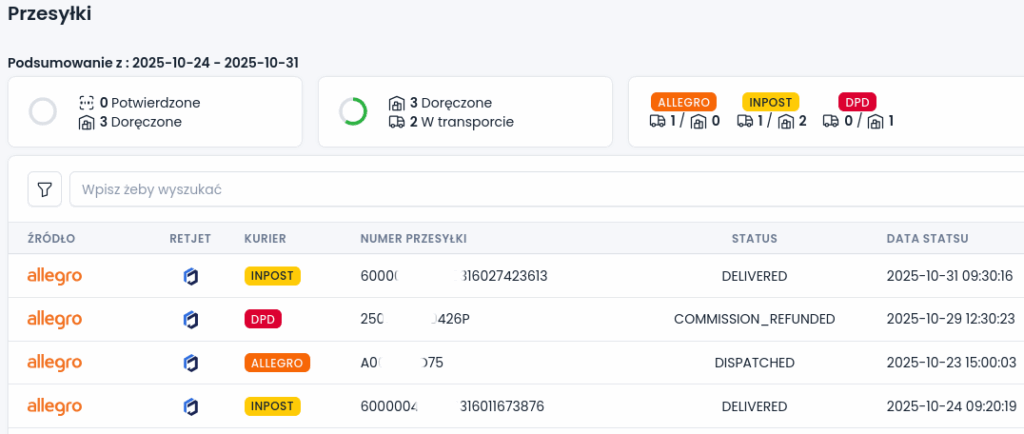
RetJet shows shipments currently on their way to the store, even ones without a request. That means better warehouse planning and fewer mistakes.
- An 'in transit' list with parcel counts and an expected delivery date
- Shows shipments that don't have a request yet, too
- An 'expected vs. received' summary highlights the differences
-
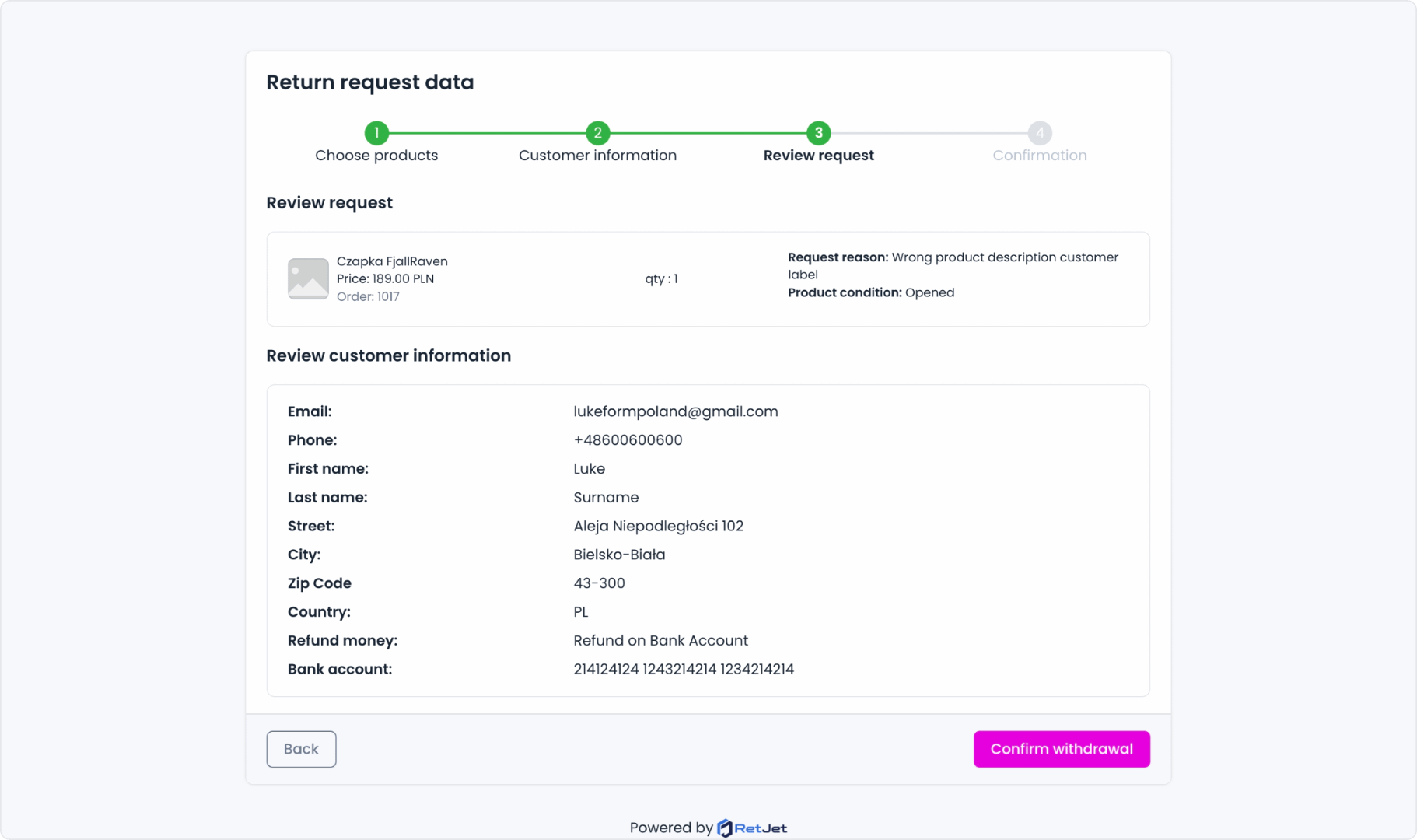
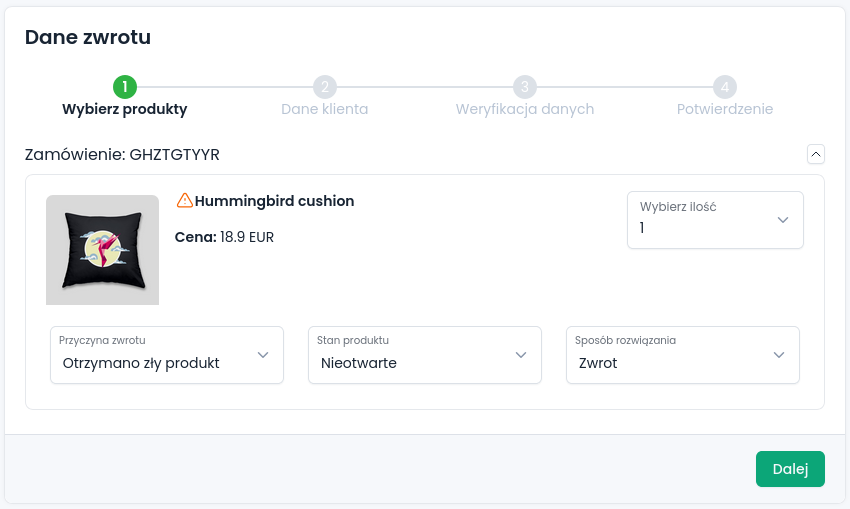
The customer submits a return through the form and gets a shipping code or label. They drop the parcel off at a pickup point, with a courier, or at a locker, no printer needed.
- A form on the store's own domain, no account needed for the customer
- A shipping code or label right after the request is submitted
- Drop-off at a pickup point, with a courier, or at a locker, no printer needed
-
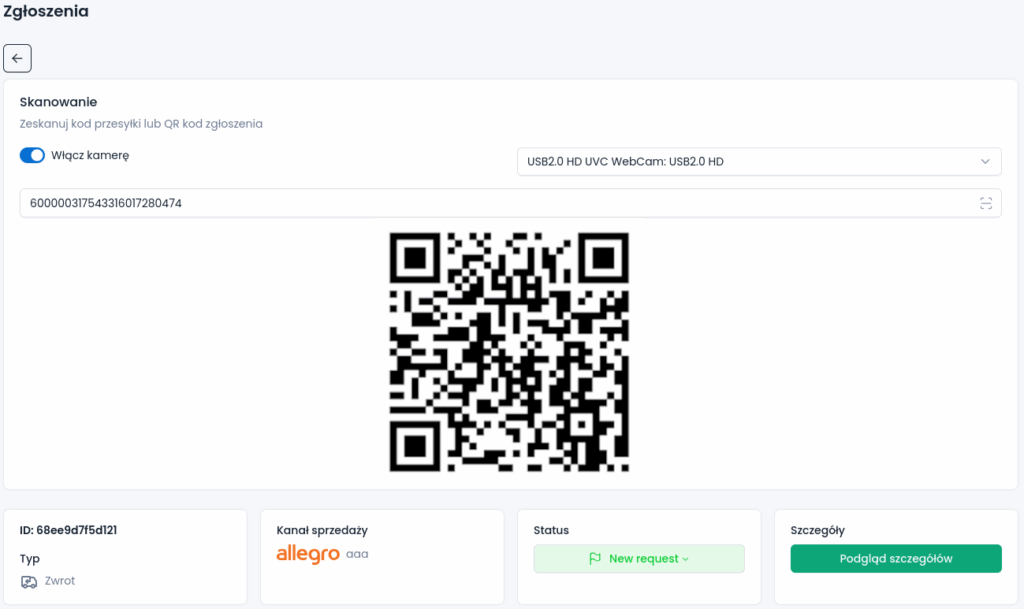
Ever wonder whose parcel just arrived at your warehouse? RetJet reads the label number and matches it to the return and order automatically.
- A scanner or camera reads the label number or QR code
- Batch mode for deliveries with many parcels at once
- A parcel without a request goes to an 'identification needed' queue
- An action trail: who received a given shipment, and when
-
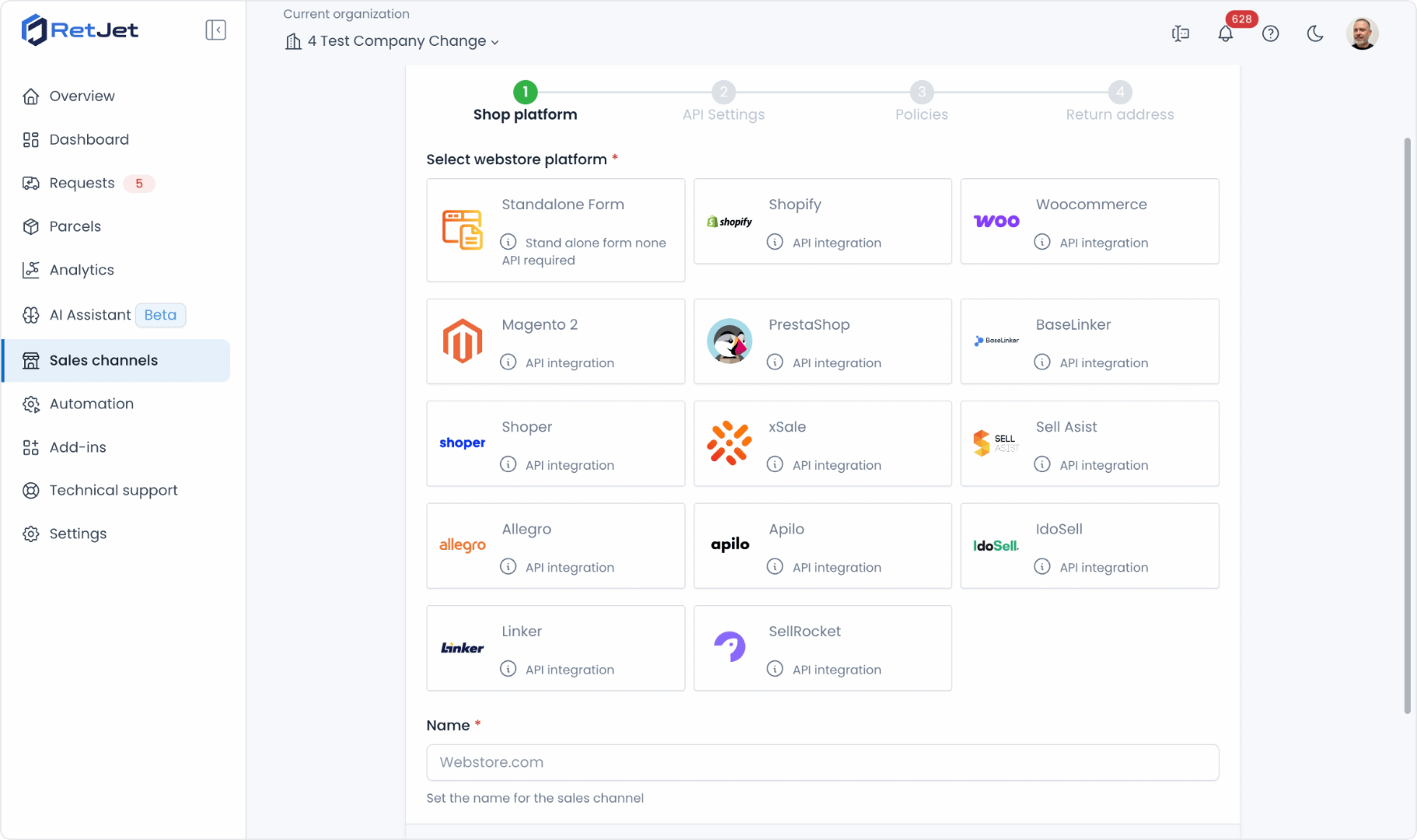
A lightweight API integration. Order data is fetched only at the moment the customer submits a return request. No 'just in case' import.
- A request to the store only at the moment of submission, never 'just in case'
- No constant sync of the entire order database
- Faster setup and fewer points of failure
-
A built-in, easy-to-find right-of-withdrawal button for every online contract. Full support for EU Directive 2023/2673.
- A clear 'Withdraw from the contract' function on the store's site
- The statement is saved with a date and time, and the customer gets confirmation
- The case then follows the regular return handling flow
What else you get in the dashboard
Capabilities without their own pages, set up once and running in the background. What you get depends on your plan.
Workflow automation
Repeatable decisions made without a human in the loop.
-
Automatic rules
You build a rule from events and actions, combining conditions with "and" and "or". An event can be a new request, its type, sales channel, a status change, a parcel arriving at the warehouse, or a code scan, among others. An action can change the status, assign the case to a person, add a watcher, or export the request to the sales channel.
-
Message templates
Replies you send over and over, you write once. The team answers consistently, and a new hire doesn't have to invent their own wording.
-
Notifications
News of a new request and a status change reaches the right people, instead of waiting for someone to check the list.
Your rules, not ours
Dictionaries and settings that fit the process to your store.
-
Custom request statuses
Name the handling stages your own way and set them in the order you actually work in. Returns and warranty claims can follow separate paths.
-
Reasons, resolutions and product condition
Three dictionaries used by the customer at request time and by the team on receiving. They also become the raw material for reports on what comes back and why.
-
Deadlines and rules per channel
Every sales channel has its own deadline for returns and warranty claims, and its own return address. A fashion store and an electronics store don't have to work the same way.
-
Rules for selected products
List EAN or SKU codes and decide what happens for exactly those: the request goes through or gets blocked, with your own message to the customer. A rule can add its own questions to the form, and a yes/no answer can override that decision.
-
Request tags
Custom labels for things a status can't capture: a difficult case, pending settlement, a wholesale customer.
A form for your customer
What the buyer sees before their request reaches you.
-
Three ways to publish it
A ready-made address on our side, a form embedded on your store with a single script, or a button that opens a window. The first option works without touching your site at all.
-
Case preview for the customer
The buyer gets their own request page with its status and can message the store from it. No account to create, no follow-up emails asking what happens next.
-
Photos with the request
The customer attaches photos of the damage right away, so a decision can be made without a back-and-forth of messages.
Warehouse and shipments
The parcel's way back, from drop-off to being logged as received.
-
Shipment list
A dedicated view of every parcel heading to the store, whether or not it already has a request.
-
Receiving by scan
A warehouse worker scans the code, and the system finds the case and updates its status. A record is kept of who received the parcel, and when.
-
Labels on your contracts or ours
Connect your own carrier accounts or use ours. The choice is yours, and you can change it later.
Knowledge and team
What's left once requests are handled, and who gets to see it.
-
Request analytics
A breakdown of reasons, the products and SKUs involved most often, a split between returns and warranty claims, by sales channel and by the person handling them. Plus amounts: totals, averages and outliers.
-
Export to spreadsheet
Download the request list to Excel when you need to run your own numbers or hand data to accounting.
-
Team and permissions
Add employees to your organization and assign them cases. See who's handling which request and who closed it.
-
AI assistant
A chat inside the dashboard that helps create a request, draft a message template, or look through your data. Availability depends on your plan.
Join RetJet and take control of your returns!
Free plan to start: 25 requests a month, no card required and no trial period that runs out.