
Warranty Claim Process Step by Step

A customer writes that their shoes came apart after a month, or that the coffee machine stopped heating. For the store, this is a warranty claim. It has rules, deadlines and a cost if it goes wrong, and it usually takes longer than a return because the condition of the product has to be assessed.
This post walks through the warranty claim process from the store’s side: what the law expects, and how to handle a claim so that it does not come back a month later.
Legal guarantee and commercial warranty
Two different things are often both called “warranty”.
The legal guarantee is the seller’s liability for goods that do not conform to the contract. In the European Union it comes from Directive (EU) 2019/771. It applies to every sale to a consumer, cannot be excluded, and the claim is made against the store, not the manufacturer.
A commercial warranty is voluntary. It is offered by the manufacturer or the seller on its own terms, for example five years on a motor. It works alongside the legal guarantee and does not replace it.
When a customer reports a fault, start by establishing which of the two they are using. The rules below are about the legal guarantee.
What the EU rules require
Under the directive, the seller is liable for any lack of conformity that exists at delivery and becomes apparent within at least two years. Member states may set longer periods.
For a period after delivery, a fault is presumed to have existed from the start, so the customer does not have to prove it. The directive sets this at one year as a minimum, and some countries extend it to two. Poland, for example, applies two years.
The customer’s remedies come in order:
- Repair or replacement first. The customer chooses. The seller may refuse the chosen option if it is impossible or would cost disproportionately more than the other one. Repair or replacement must be free of charge for the customer, including shipping.
- Then a price reduction or termination of the contract. These are available if the seller did not repair or replace the product, if the fault comes back, or if it is serious enough to justify them straight away. Termination is not available for a minor fault.
Response deadlines are set nationally. In Poland, a store that does not reply to a consumer’s claim within 14 days is deemed to have accepted it. Check the rules in each country you sell to.
The warranty claim process in five steps
1. Receive the claim and record the date
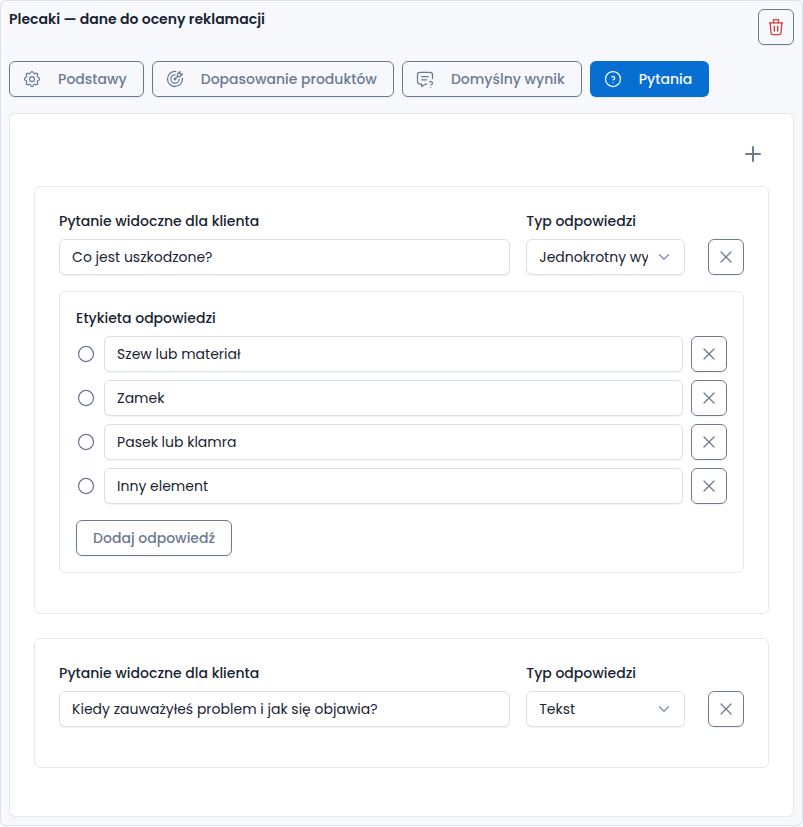
Note when the claim arrived, what product it concerns and what the customer is asking for. A claim form with fields for the fault description, photos and the requested remedy saves several rounds of email. The date matters most: any national deadline starts from it.
2. Check the purchase
Find the order and the delivery date, because the two-year period runs from delivery. The customer does not need the original receipt. A payment confirmation or an order email also proves the purchase.
3. Assess the fault
Photos or a short video are often enough to assess the claim without the product being sent back. If you need to see it, tell the customer how to send it. Under the legal guarantee, the store pays for that shipping when it repairs or replaces the product.
4. Reply in writing
Send the decision in writing, by email at least. If you accept the claim, say what happens next: repair, replacement, price reduction or refund, and by when. If you reject it, explain why. A rejection without a reason is the most common start of a dispute.
5. Complete the remedy and keep the record
An accepted claim is not closed until the replacement has shipped, the repaired product is back or the money has been refunded. Record every step with its date. In a dispute or an inspection, that record is the only evidence that the store kept its deadlines.
Where stores go wrong
- The claim sits in an inbox and the deadline passes without a reply.
- The customer is sent to the manufacturer, although under the legal guarantee the store is liable.
- The customer is asked to pay for shipping when the product is repaired or replaced.
- There is no history. Six months later nobody remembers what was agreed, and the same fault is reported again.
All four come from the same cause: claims live in emails, notes and people’s memory. When every claim has a date, a status and an owner from the moment it arrives, deadlines are hard to miss. That is how the warranty claims management system in RetJet works: a claim form with fault descriptions and photos, statuses, customer messages and the full history in one place.
Frequently asked questions
Can the store send the customer to the manufacturer?
It can offer the manufacturer’s commercial warranty if there is one, but it cannot refuse to handle a claim under the legal guarantee. The customer decides which route to take.
Do the rules apply to business customers?
The directive protects consumers. Sales between businesses follow national civil law and the contract.
Can the two years be shortened?
Not for new goods sold to consumers. For second-hand goods, national law may allow a shorter period agreed with the buyer.
Source: Directive (EU) 2019/771 on contracts for the sale of goods, EUR-Lex